Friday, November 2, 2018

Forest Sounds


Some years ago I posted the LP Pre-Festival Lagos 77, featuring tracks from a number of Guinean orchestras who were in competition to appear at the memorable Second World Black and African Festival of Arts and Culture, or FESTAC '77, which was held in Lagos in 1977.

One of these groups was the memorable Nimba de N'Zérékoré, based in Guinea's second city. The group also released an album on their own in 1980, Gön Bia Bia (Syliphone SLP 71), which I present today. From the French liner notes I take it these songs are based on traditional initiation rites. Since I don't know French and don't have access to anyone who does at the moment, I've depended on Google Translate to render these. The results, while hardly "vernacular" English, are oddly poetic! For instance, this passage by producer Justin Morel Junior:

This disc is an ethnology page.

It retraces moments of initiation. The initiation marks in the traditional society the passage of the child-adolescence the maturity, at the age of responsibility.

"Initiation is understood as a set of practices aimed at communicating to the individual necessary for his proper integration into society. In short, all the moral patrimony of the group that is transmitted on the occaision of initiation":

GÖN BIA BIA", the essential title of this disc, celebrates the departure for the initiatory camp. The merit of the Nimba musicians of the City of N'zérékoré, is to have been able to transpose the sounds with fidelity. Foresters: these hoarse voices, these phoned rhythms, these tiered horns that reproduce an endearing forest atmosphere. At the end of listening to these songs, we can no longer doubt the words of the conductor of Nimba, Samaké Namakan: "the mysteries of the forest can be mastered in music"
Comments on the songs likewise are from the liner notes, via Google Translate.

Gön Bia Bia - "This song tells of the departure for the initiation camp. Blowers shine, guitarists sparkle. Beautiful stereo dialogue blowers. Sovereign intervention of tenor KOUI BAMBA. Warming!"

Le Nimba de N'Zérékoré - Gön Bia Bia

Kori Magnin - "Literally: 'Fatigue is Dangerous.' In the deep meaning it is about 'deprivation.' The solo guitar breaks loose and screams its revolt in enflamed notes."

Le Nimba de N'Zérékoré - Kori Magnin

Ziko - "Call singing telephoned and answered with passion."

Le Nimba de N'Zérékoré - Ziko

Babaniko - "This is the favorite piece of the orchestra. Taken with warmth, color and flavor, it is the song of exit of the initiation camp. Succulent dialogue of the wind. Broken voices. Rhythms cut. Spicy melodies."

Le Nimba de N'Zérékoré - Babaniko

Kongoroko - "The forest is resplendent and sunny. The secret forest, mysterious. The forest that thinks and dances! Stubborn rhythm. Rapacious music."

Le Nimba de N'Zérékoré - Kongoroko

Zoo Mousso - "Song of gratitude, reunion and rejoicing."

Le Nimba de N'Zérékoré - Zoo Mousso

Download Gön Bia Bia as a zipped file here. A technical note: this is one of the first albums I digitized a dozen years ago when I was first getting started with this blog. I hadn't yet mastered the software and there's a little clipping on some of the tracks. It's not too noticeable, though. My apologies.


Saturday, October 27, 2018

An Overlooked Genius


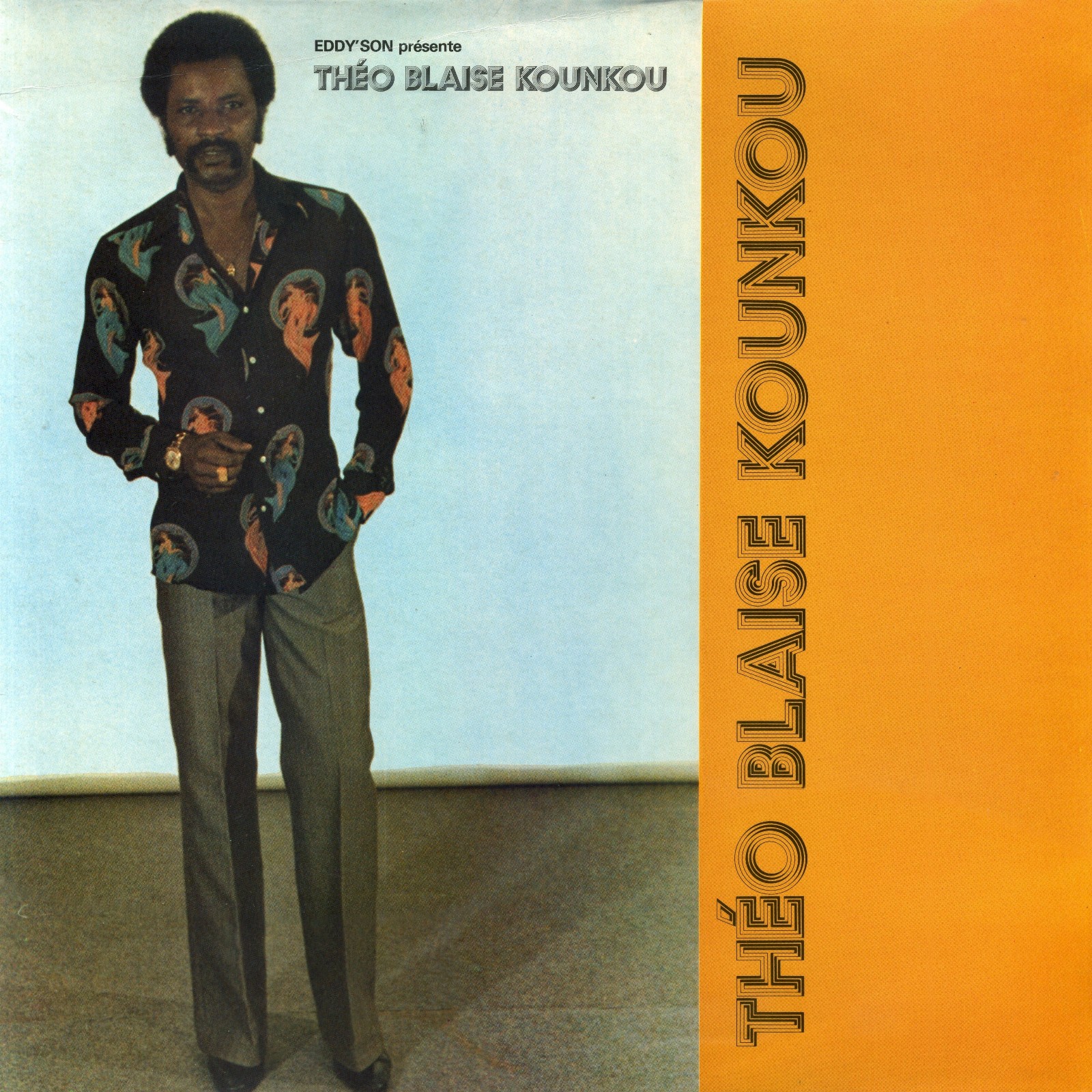
Théo Blaise Kounkou is one of those African musicians who, while building substantial careers and achieving popularity throughout Africa and the diaspora, have received little notice in the broader musical community. This is a shame.

Blaise was born in Brazzaville on April 24, 1950 in the former French Congo. Here he performed with various groups, notably Les Grands As. It was in Abidjan, Ivory Coast, however, that he really made his mark as part of Sam Mangwana's groundbreaking African All-Stars. The All-Stars lasted only from 1978-79 in their original incarnation (reemerging in later years as Mangwana's backup band). They revolutionized the existing Congo music paradigm, speeding up the tempo and introducing various pop and funk influences. The group toured West Africa from Nigeria to Senegal and has had a lasting influence on the music of the region.

After the All-Stars broke up most of the members, including Mangwana, Lokassa Ya M'Bongo, Bopol Mansiamina, Syran M'Benza and Blaise, gravitated to Paris, where they formed the nucleus of the burgeoning African music scene in that country. It was here that Théo Blaise Kounkou recorded at least a dozen solo LPs. Back in the early '90s a series of three CDs, Le Plus Grands Succès Vols. 1-3, was released, compiling some of the highlights, but far from all. Not included in any of those volumes are the tracks from today's offering, Célia (Disques Sonics SONIC 79 397, 1983).

Célia is classic Blaise, showcasing not only his lovely voice but a lineup of crack session musicians, including not only Bopol Mansiamina on bass and rythm guitar but the brilliant Master Mwana Congo on lead. It's a highlight of the classic 1980s Congo sound!


Download Celia as a zipped file here.


Monday, October 22, 2018

I Just Saved You $1350.71


As more evidence that the collectors' market for used African recordings has entered Dutch Tulip Mania territory, I present the following from Amazon:


Not too long ago I wrote of the ridiculous asking price for a used cassette of a classic recording by King Sunny Adé. That was absurd, but at least Sunny has been an international superstar for almost 50 years. While Obiajulu Emmanuel Osadebe came from musical royalty (his father was Nigeria's late, great highlife master Stephen Osita Osadebe), and was talented, his recording career, prior to his untimely death in 2009, had not reached a level anywhere near that of his father. I have two vinyl LPs by him from the early '90s, and the CD Ifugo America (O & I Productions OANDI 001, 1998) was recorded during a sojourn in Atlanta during the late '90s. That's the extent of his recorded outlet as far as I know. He also opened for Sunny Adé during a US tour shortly before his death.

Obialju died only a year after his father passed away. The Nation newspaper of Nigeria wrote this on the occasion of his death:

The first son of the late highlife music maestro, Chief Stephen Osita Osadebe, Obiajulu, is dead. According to a family source, Obiajulu, 43, died on Tuesday at Niger City Hospital, Onitsha, Anambra State, after a brief illness. 
The body has been deposited at the Ozubulu Central Mortuary in Ekwusigo Council area of Anambra State. Although the cause of his death could not be ascertained as at press time, there were speculations that he died of heart failure. He had been bed-ridden for over five months at his Atani country home, Ogbaru Local Government Area, Anambra State. 
Obiajulu, who came back to the country after the burial of his father on February 8, last year, stepped into his father’s shoes, remixing some of his hit songs. He also performed at some popular joints within and outside Onitsha. 
Until his death, Obiajulu was married to Olayinka. They have a daughter. Besides, he is survived by an aged mother, brothers and sisters. 
Ifugo America is a pretty good recording, albeit a little too dependent on synthesizer (Obiajulu's Nigerian albums used his father's backup band), but that's no doubt a matter of economics. I just don't think it's worth $1350.71. But decide for yourself!


Download Ifugo America as a zipped file here.