Saturday, November 17, 2018

Awesome Awigiri


A while back I did a post devoted to awigiri, the highlife music of the Ijaw (Izon) people of the Niger Delta. I have quite a few LPs of this particular genre, and I've been digitizing them in preparation for a future post, or series of posts. In the process this particular album, Late Chief Ohbobo Special (Success SSLP 027) really caught my attention and I thought it was worth posting in full.

I know absolutely nothing about the Boroism International Dance Band of Nigeria or its leader, Jay Eboge - "Monkey No Fine." I assume the group takes its name from Isaac Adaka Boro, who led a twelve-day armed uprising against the Nigerian and Eastern Nigerian governements in 1966. He was subsequently jailed, then amnestied on the eve of the Biafran war of independence in 1967. He died fighting for the Nigerian Federal Government in 1968 under what are described as "mysterious" circumstances and is a hero to Niger Delta indegenes.

I particularly enjoy the saxophone work on this album by a musician credited only as "Boma." I hope you'll enjoy it also.

Boroism International Dance Band of Nigeria - Late Chief Ohbobo Special

Boroism International Dance Band of Nigeria - Late Commodor Kentebe

Boroism International Dance Band of Nigeria - Izon Otu Meinye Ana

Boroism International Dance Band of Nigeria - Late Cardinal Rex Jim Lawson

Boroism International Dance Band of Nigeria - Asima Popo

Download Late Chief Ohbobo Special as a zipped file here.


Monday, November 12, 2018

Deep Awurebe!


Wow, check out the tribal marks on these guys! The cover of Iya Alakara (Awurebe Records DELP 8303, 1983) is arresting, the music on the inside even more so.

Alhaji Dauda Epo Akara called his music awurebe. I'm not exactly sure where it stands in relation to other percussion-fueled Yoruba musical styles like fújì, àpàlà and the like. Maybe it's just a marketing gimmick. Whatever the provenance, it's very impressive music!

According to his sparse Wikipedia entry, Dauda Epo Akara was born on June 23, 1943. The Nigerian newspaper This Day reported that he passed February 18, 2005. Wikipedia says that he started out as a practitioner of wéré (or ajisáàri), an Islamic style of music meant to be played during Ramadan, and updated it after returning from his hajj to Mecca and Medina. At least judging by this recording awurebe lacks the religious focus of wéré , but shares the characteristic vocal flourishes of "secular" Islamic styles like fújì and the like.

The respected Nigerian music journalist Benson Idonije wrote in 2008:

Three years have passed slowly by since Awurebe King Dauda Kolawole Akanmu, known in show business as Dauda Epo Akara passed on, in 2005. His exit marked the end of a musi-cultural era, the era of a generation of musicians whose roots are deep in the urban social fabric and heritage of the Yoruba speaking people of South Western Nigeria.

An indigenous music type whose hallmark is the syncopation of rhythms generated in patterns that are intricate, Awurebe is the fusion of àpàlà, sákárà, woro and even dadakuada from Kogi and Kwara States of Nigeria. It is the perfect blend of these various musical cultures that have given it a uniquely definitive sound identity.

While Haruna Isola and Ajao Oru pioneered àpàlà and took it to a level where it became universally accepted, Yusuf Olatunji popularised sákárà and established it as an acceptable social music type. And of course the likes of Batile Alake took on the female version of these music forms and handed it down to the likes of Salawa Abeni who is still carrying on the tradition.

Even though Epo Akara's awurebe came much after the first generation of our traditional musicians, his fusion was blended to fall into the same era. As a matter of fact, like fújì music, awurebe is a product of the street music performed during Ramadan called wérè. He was influenced in the same way that Alhaji Ayinde Barrister was, but this influence affected them differently.

While Barrister merely accompanied his social commentaries with the legion of drums and other percussion instruments in a direct fusion, Dauda, who, perhaps was operating from a point where he had been influenced by almost all the social music genres, decided to fuse elements of everything into one whole unit.

The music did not assume the commercial viability that fújì had because of its direct identification with the roots of our traditional forms. For instance, Epo Akara's awurebe did not have widespread acceptance in Lagos until the 1980s, even though it was popular in places like Mushin and Somolu, with danfo drivers and meat sellers as the bulk of its devotees. The music came into the forefront with the emergence of the Top 10, instituted in the early 1980s by Radio Nigeria 2....
Enjoy this deep, deep Yoruba roots music!

Alhaji Dauda Epo Akara & his Awurebe Experts - Won Ti Fepo Lade / Ota Awori Nile Won / Yusuf Oladejo / Epo Ni Roju Obe

Alhaji Dauda Epo Akara & his Awurebe Experts - Tiri-Misi- Riyu / Egbe Ifelodun (Abajan) / E Fowo Mi Wo Mi / Iya Alakara

Download Iya Alakara as a zipped file here. In preparation for this post, I did a little research on the question of  "tribal marks" in Nigeria and discovered that they are, or used to be, most common among the Yoruba people, although other groups have them also. I take it they are considered somewhat old-fashioned these days, as indicated by the delightful video below. I think they're kind of awesome myself!


Wednesday, November 7, 2018

Liberian Voices


Liberia has never played a big role in the African music scene. In a fascinating post on his old Voice of America blog, Matt Lavoie surveys the 1960s Liberian musical landscape and includes a number of recordings. The Ghanaian producer Faisal Helwani set up a recording studio in Monrovia in the early '80s, and claimed to have 54 albums ready for release, but apparently only two, by Fatu Gayflor and Cesar Gator, saw the light of day. Increasing political and economic instability, leading to the onset of the first Liberian Civil War in 1989, put the kibosh on whatever musical scene existed in the country.

At some point a Liberian band, the Music Makers, made it to Onitsha, Nigeria, where they were recorded by R.E. Okonkwo's legendary Rogers All Stars label in 1988. Their album Enjoyment (Rogers All Stars RASLPS 096) brings to mind the sound of Afro National from neighboring Sierra Leone, who acheived fame in the 1970s. Other than that I can't tell you anything about this enigmatic group.

Enjoy this sample from the lost world of Liberian music!


Download Enjoyment as a zipped file here. A technical note: This album is one of a number I picked up directly from the Rogers All Stars office in Onitsha. One thing I've noticed about these late-'80s RAS LPs is the muddy quality of the sound. I have no idea why this should be: poor mastering? I've tried to compensate for this by boosting the high and low frequencies slightly, to limited effect. My apologies.


Friday, November 2, 2018

Forest Sounds


Some years ago I posted the LP Pre-Festival Lagos 77, featuring tracks from a number of Guinean orchestras who were in competition to appear at the memorable Second World Black and African Festival of Arts and Culture, or FESTAC '77, which was held in Lagos in 1977.

One of these groups was the memorable Nimba de N'Zérékoré, based in Guinea's second city. The group also released an album on their own in 1980, Gön Bia Bia (Syliphone SLP 71), which I present today. From the French liner notes I take it these songs are based on traditional initiation rites. Since I don't know French and don't have access to anyone who does at the moment, I've depended on Google Translate to render these. The results, while hardly "vernacular" English, are oddly poetic! For instance, this passage by producer Justin Morel Junior:

This disc is an ethnology page.

It retraces moments of initiation. The initiation marks in the traditional society the passage of the child-adolescence the maturity, at the age of responsibility.

"Initiation is understood as a set of practices aimed at communicating to the individual necessary for his proper integration into society. In short, all the moral patrimony of the group that is transmitted on the occaision of initiation":

GÖN BIA BIA", the essential title of this disc, celebrates the departure for the initiatory camp. The merit of the Nimba musicians of the City of N'zérékoré, is to have been able to transpose the sounds with fidelity. Foresters: these hoarse voices, these phoned rhythms, these tiered horns that reproduce an endearing forest atmosphere. At the end of listening to these songs, we can no longer doubt the words of the conductor of Nimba, Samaké Namakan: "the mysteries of the forest can be mastered in music"
Comments on the songs likewise are from the liner notes, via Google Translate.

Gön Bia Bia - "This song tells of the departure for the initiation camp. Blowers shine, guitarists sparkle. Beautiful stereo dialogue blowers. Sovereign intervention of tenor KOUI BAMBA. Warming!"

Le Nimba de N'Zérékoré - Gön Bia Bia

Kori Magnin - "Literally: 'Fatigue is Dangerous.' In the deep meaning it is about 'deprivation.' The solo guitar breaks loose and screams its revolt in enflamed notes."

Le Nimba de N'Zérékoré - Kori Magnin

Ziko - "Call singing telephoned and answered with passion."

Le Nimba de N'Zérékoré - Ziko

Babaniko - "This is the favorite piece of the orchestra. Taken with warmth, color and flavor, it is the song of exit of the initiation camp. Succulent dialogue of the wind. Broken voices. Rhythms cut. Spicy melodies."

Le Nimba de N'Zérékoré - Babaniko

Kongoroko - "The forest is resplendent and sunny. The secret forest, mysterious. The forest that thinks and dances! Stubborn rhythm. Rapacious music."

Le Nimba de N'Zérékoré - Kongoroko

Zoo Mousso - "Song of gratitude, reunion and rejoicing."

Le Nimba de N'Zérékoré - Zoo Mousso

Download Gön Bia Bia as a zipped file here. A technical note: this is one of the first albums I digitized a dozen years ago when I was first getting started with this blog. I hadn't yet mastered the software and there's a little clipping on some of the tracks. It's not too noticeable, though. My apologies.


Saturday, October 27, 2018

An Overlooked Genius


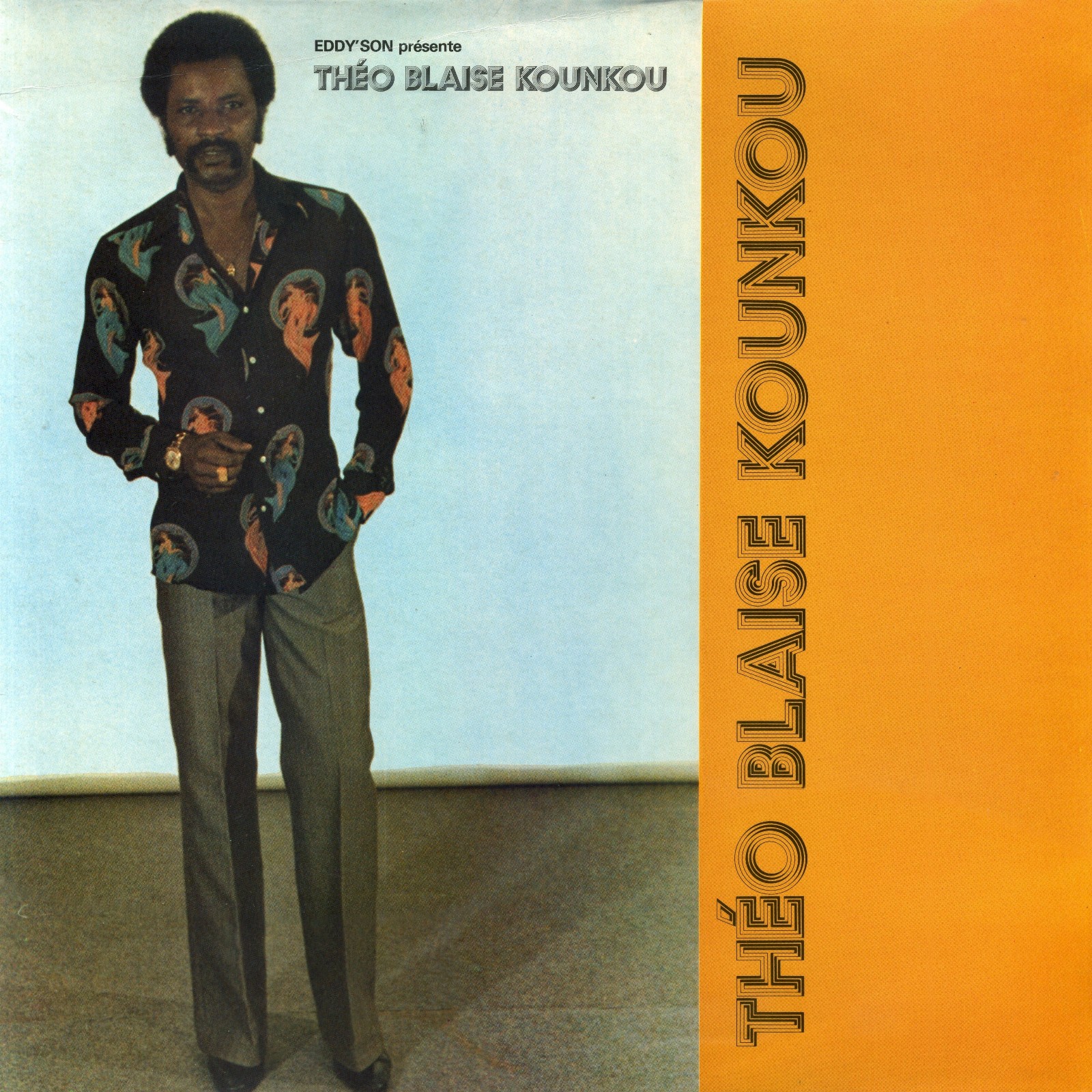
Théo Blaise Kounkou is one of those African musicians who, while building substantial careers and achieving popularity throughout Africa and the diaspora, have received little notice in the broader musical community. This is a shame.

Blaise was born in Brazzaville on April 24, 1950 in the former French Congo. Here he performed with various groups, notably Les Grands As. It was in Abidjan, Ivory Coast, however, that he really made his mark as part of Sam Mangwana's groundbreaking African All-Stars. The All-Stars lasted only from 1978-79 in their original incarnation (reemerging in later years as Mangwana's backup band). They revolutionized the existing Congo music paradigm, speeding up the tempo and introducing various pop and funk influences. The group toured West Africa from Nigeria to Senegal and has had a lasting influence on the music of the region.

After the All-Stars broke up most of the members, including Mangwana, Lokassa Ya M'Bongo, Bopol Mansiamina, Syran M'Benza and Blaise, gravitated to Paris, where they formed the nucleus of the burgeoning African music scene in that country. It was here that Théo Blaise Kounkou recorded at least a dozen solo LPs. Back in the early '90s a series of three CDs, Le Plus Grands Succès Vols. 1-3, was released, compiling some of the highlights, but far from all. Not included in any of those volumes are the tracks from today's offering, Célia (Disques Sonics SONIC 79 397, 1983).

Célia is classic Blaise, showcasing not only his lovely voice but a lineup of crack session musicians, including not only Bopol Mansiamina on bass and rythm guitar but the brilliant Master Mwana Congo on lead. It's a highlight of the classic 1980s Congo sound!


Download Celia as a zipped file here.


Monday, October 22, 2018

I Just Saved You $1350.71


As more evidence that the collectors' market for used African recordings has entered Dutch Tulip Mania territory, I present the following from Amazon:


Not too long ago I wrote of the ridiculous asking price for a used cassette of a classic recording by King Sunny Adé. That was absurd, but at least Sunny has been an international superstar for almost 50 years. While Obiajulu Emmanuel Osadebe came from musical royalty (his father was Nigeria's late, great highlife master Stephen Osita Osadebe), and was talented, his recording career, prior to his untimely death in 2009, had not reached a level anywhere near that of his father. I have two vinyl LPs by him from the early '90s, and the CD Ifugo America (O & I Productions OANDI 001, 1998) was recorded during a sojourn in Atlanta during the late '90s. That's the extent of his recorded outlet as far as I know. He also opened for Sunny Adé during a US tour shortly before his death.

Obialju died only a year after his father passed away. The Nation newspaper of Nigeria wrote this on the occasion of his death:

The first son of the late highlife music maestro, Chief Stephen Osita Osadebe, Obiajulu, is dead. According to a family source, Obiajulu, 43, died on Tuesday at Niger City Hospital, Onitsha, Anambra State, after a brief illness. 
The body has been deposited at the Ozubulu Central Mortuary in Ekwusigo Council area of Anambra State. Although the cause of his death could not be ascertained as at press time, there were speculations that he died of heart failure. He had been bed-ridden for over five months at his Atani country home, Ogbaru Local Government Area, Anambra State. 
Obiajulu, who came back to the country after the burial of his father on February 8, last year, stepped into his father’s shoes, remixing some of his hit songs. He also performed at some popular joints within and outside Onitsha. 
Until his death, Obiajulu was married to Olayinka. They have a daughter. Besides, he is survived by an aged mother, brothers and sisters. 
Ifugo America is a pretty good recording, albeit a little too dependent on synthesizer (Obiajulu's Nigerian albums used his father's backup band), but that's no doubt a matter of economics. I just don't think it's worth $1350.71. But decide for yourself!


Download Ifugo America as a zipped file here.


Wednesday, October 17, 2018

"The Otis Redding of Zimbabwe" (Eyeroll)


Oliver "Tuku" Mutukudzi has been called "The Otis Redding of Zimbbawe," a comparison that has always irritated me. Oliver Mutukudzi isn't the Otis Redding of Zimbabwe, he's the Oliver Mutikudzi of Zimbabwe - his music stands on its own, it's unique and incomparable. Moreover, these sort of analogies, well-meaning, often made by publicists and music journalists, seem really ethnocentric, as if American or European music is the baseline against which all other music is defined.

End of rant. Born in 1952, Oliver grew up in Highfield, the historic African "ghetto" of Harare (called Salisbury under Ian Smith's racist Rhodesian regime) and learned to play a homemade instrument from a book called "It's Easy to Play the Guitar." He started singing gospel music and in 1975 joined Thomas Mapfumo in the Wagon Wheels band. By the '80s, as a solo artist, he had acheived massive fame in Zimbabwe, with many best-selling singles and albums and growing popularity across Southern Africa. By the turn of the century, several international releases and tours had made Mutukudzi, along with Mapfumo, one of the two most popular Zimbabwean musicians in the world.

Here is Nzara (Kudzanayi BL 459), a 1983 release that showcases Tuku at the peak of his powers, his soulful voice soaring above inspired arrangements and a variety of styles. Enjoy!


Download Nzara as a zipped file here. I have another album by Oliver Mutukudzi, Sugar Pie, that I'll be posting soon.